
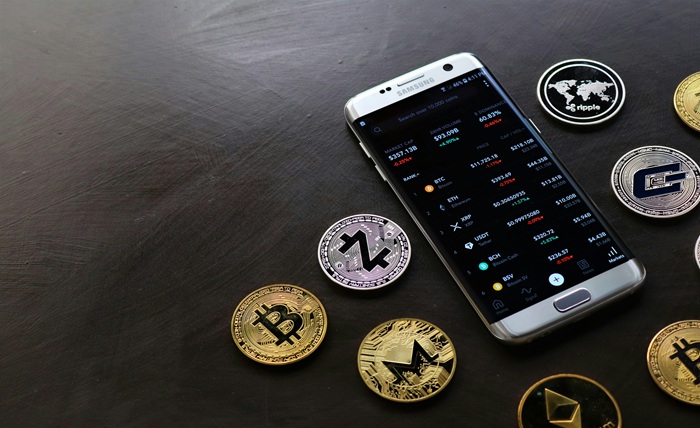
Bitcoin still sits at the center of the crypto market, even with new coins and trends appearing all the time. It doesn’t need to dominate every conversation to stay relevant. Most of the time, it’s enough that people are watching it. When Bitcoin starts to move, the rest of the market usually reacts in some way.
You can see this in how closely people track changes in btc to inr, as it’s often one of the first things checked, not just to see where Bitcoin is, but to get a quick sense of the market overall. If Bitcoin looks strong, confidence tends to pick up. If it starts to slow down, that uncertainty spreads quite quickly.
That link between Bitcoin and general sentiment has been around for a while, but it feels more noticeable now. The market has grown, but the starting point hasn’t really changed.
Bitcoin Still Leads the Market
One of the easiest ways to understand Bitcoin’s influence is by looking at how much of the market it still holds. According to Binance insights, Bitcoin accounts for around 59% of total crypto market dominance.
That’s a big share and it shows up in how other assets behave. When Bitcoin moves upward with some momentum, smaller coins often follow. When it stalls or drops, that hesitation spreads across the market as well.
It’s not something that needs to be announced; you can just see it happening. Many assets don’t fully commit to a direction until Bitcoin does first. Some react quickly, others take a bit longer, but the pattern is there.
It’s less about Bitcoin controlling everything and more about it setting the pace. The rest of the market tends to adjust around that.
More Attention Is Coming, But It’s Still Early
There’s also been more interest coming in from larger investors, although it hasn’t reached the same level as traditional markets yet.
Binance insights show that spot Bitcoin ETFs currently make up around 9% of total BTC spot volume. In more established markets, similar products often account for closer to 30–40%.
That difference gives a sense of where things stand. There’s clearly more attention than before, but it’s still early in terms of how the market is structured. You have a mix of different participants and they don’t all behave in the same way.
Because of that, price movements can feel uneven. Sometimes things move quickly without much warning. Other times they slow down even when it feels like they shouldn’t.
That mix is part of what makes the market harder to read, especially in the short term.
Bitcoin Reacts to Global Events Now
Bitcoin used to feel more separate from the rest of the financial world. It moved based on its own trends and outside events didn’t always have much impact.
That’s changed over time. According to Binance insights, Bitcoin has started to track movements in oil prices and respond more directly to major headlines.
You can notice it during busy news cycles. A big story breaks and Bitcoin reacts almost straight away. Sometimes that move holds; sometimes it fades, but the reaction is still there.
It doesn’t mean Bitcoin behaves exactly like traditional assets. The reactions can still be sharper or less predictable. But the connection is stronger than it used to be and that changes how people look at the market.
It’s no longer just about what’s happening inside crypto. External factors play a role too.
Market Patterns Still Show Up Over Time
Even with all these changes, some patterns still show up if you step back and look at things over a longer period.
Historically, certain phases have brought sharper drops, followed by stronger recoveries once conditions settle. Binance insights point out that midterm cycles often follow this kind of pattern, with Bitcoin reacting more strongly than many other assets.
It doesn’t always feel clear while it’s happening. In the moment, price movement can look messy. Different factors are pulling in different directions and it’s hard to tell what actually matters.
But over time, those patterns tend to stand out more. When you zoom out, the structure becomes easier to see, even if it didn’t feel that way at the time.
That’s part of what keeps Bitcoin interesting. It doesn’t follow a simple path, but it also doesn’t move without any structure at all.
The Crypto Space Is Growing Around Bitcoin
While Bitcoin still leads, the rest of the crypto space has continued to grow. There are more ways to use digital platforms now, especially on mobile. Many users are already familiar with apps that offer quick access and smooth performance, whether it’s gaming or other digital services. That same shift toward convenience and accessibility can also be seen across crypto, where users expect faster and simpler ways to interact with the market.
One example of that is stablecoins. The stablecoin segment was valued at around $3.3 billion in 2025 and is expected to keep expanding, which shows how more people are using crypto for everyday activity, not just trading.
That kind of growth adds more movement across the market. Funds don’t just sit in one place anymore; they move between different assets and platforms more frequently.
Even with all of that, Bitcoin still sits at the center. It’s often the first thing people look at when trying to understand what’s happening, even if they’re focused on something else entirely.
The market may keep evolving and new trends will keep appearing, but Bitcoin’s role hasn’t really shifted. It still tends to move first and the rest of the market usually follows in some way, even if that reaction isn’t always immediate.